




History and Origins: The Tale of Yodie
The story of the American Bobtail cat is a fascinating example of how unique traits can emerge naturally and capture the interest of dedicated breeders. Unlike breeds meticulously crafted over centuries, the American Bobtail's roots trace back to a specific moment in the late 1960s. The foundation cat, affectionately named Yodie, was a short-tailed brown tabby male kitten discovered by John and Brenda Sanders while they were vacationing near an Native American reservation in Arizona (The International Cat Association [TICA], n.d.-a). Yodie's exact parentage remains unknown, but his distinctive bobbed tail sparked curiosity.
Intrigued by his unique appearance and charming personality, the Sanders brought Yodie home to Iowa. Yodie eventually mated with the Sanders's female domestic cat, a seal point Siamese, producing a litter that included kittens inheriting his short tail. This demonstrated that the bobtail trait was likely due to a dominant gene – meaning only one parent needs to carry the gene for the trait to appear in offspring. This initial cross marked the humble beginnings of what would eventually become the recognized American Bobtail cat breed.
Early breeders, captivated by these short-tailed felines, began selective breeding programs. Initially, there was an attempt to incorporate other bobtailed breeds like the Manx, but this introduced unwanted traits and health issues associated with the Manx gene (Cat Fanciers' Association [CFA], n.d.-a). Recognizing this, breeders shifted focus in the 1980s, moving away from the Manx influence and concentrating on developing a larger, more substantial cat with a distinctly “wild” look, but retaining a gentle, domestic temperament. They utilized various domestic longhair and shorthair cats known for their robust health, desirable temperaments, and appearances that fit the developing breed standard. The emphasis was on creating a unique American breed, shaped by natural selection and careful outcrossing to ensure genetic diversity and vigor, rather than relying heavily on established pedigreed lines initially (TICA, n.d.-a).
The goal was not simply to replicate Yodie, but to establish a consistent breed type characterized by the bobbed tail, a strong physique, and a specific, amiable personality. Breeders aimed for a cat reminiscent of a wild bobcat in appearance – with its muscular build, stalking gait, and intelligent gaze – but possessing the reliably sweet nature of a domestic companion. This careful development led to the American Bobtail cat being accepted for registration by The International Cat Association (TICA) in 1989 and later gaining championship status in other registries like the Cat Fanciers' Association (CFA) in 2000 (CFA, n.d.-a; TICA, n.d.-a). Today, the American Bobtail cat stands as a testament to the successful development of a natural mutation into a beloved and recognized breed, admired for both its unique look and its wonderful personality.
Defining Features: Physical Characteristics of the American Bobtail Cat
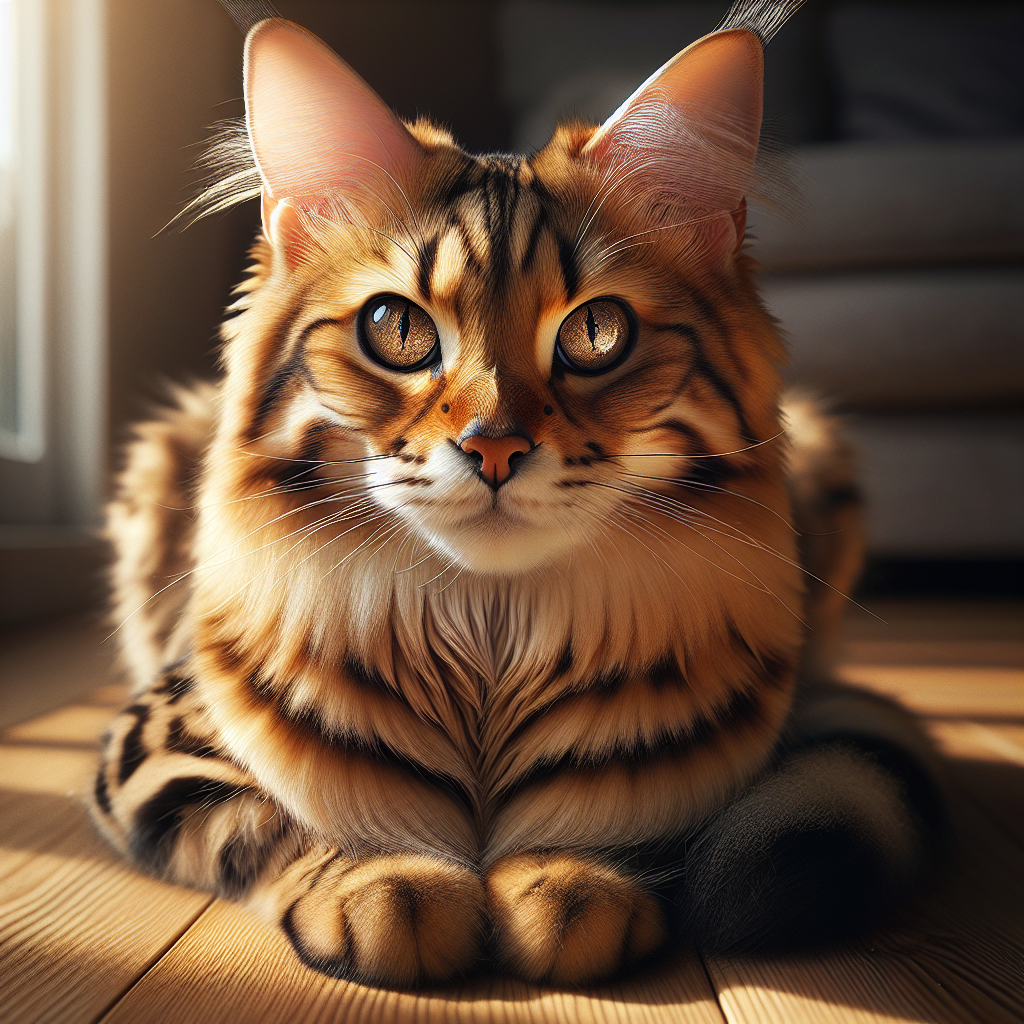
The American Bobtail cat presents a unique combination of a somewhat “wild” appearance coupled with a sturdy, athletic physique. Its most defining feature is, of course, its namesake tail, but several other characteristics contribute to its distinct look and presence. Understanding these features helps appreciate the breed standard and what makes these cats special.
The Signature Bobbed Tail: More Than Just Short
The hallmark of the American Bobtail cat is its naturally short, flexible tail. It's crucial to understand that this is the result of a spontaneous dominant genetic mutation, similar to the one that produced Yodie, and is *not* due to surgical docking (TICA, n.d.-a). This gene affects tail length, resulting in a tail that is typically between one and four inches long, although ideally, it should be visible above the back when the cat is alert but not extend past the hock (the ankle joint on the hind leg).
Unlike the taillessness sometimes seen in Manx cats, the American Bobtail mutation primarily affects length, not necessarily the structure or number of vertebrae in the way the Manx gene can (Lyons et al., 2009). Each American Bobtail cat's tail is unique – some are straight, some may have curves, bumps, or kinks along their length, and some end in a fatty pad or slight tuft. The tail should be broad at the base, expressive, and flexible. While the ideal length is sought after by breeders, the presence of the natural bobtail itself is the key characteristic. The gene responsible is different from those causing short tails in Manx or Japanese Bobtails, highlighting independent occurrences of this trait in the feline world.
Body Structure: Athletic and Substantial
The American Bobtail cat is classified as a medium to large breed, characterized by a moderately long body with a substantial, rectangular stance. They possess significant boning and well-developed musculature, giving them a powerful, athletic appearance without being overly bulky or cobby (CFA, n.d.-a). Think of a capable hunter built for agility and strength. Their chest is full and broad, and their hips are substantial, often being almost as wide as the chest. A distinctive feature is that their hind legs are often slightly longer than their front legs, contributing to a unique, slightly upward-sloping topline from shoulders to rump and potentially enhancing their powerful jumping ability (TICA, n.d.-a). This structure gives them a characteristic gait that can appear similar to that of a wild bobcat.
Head, Eyes, and Ears: A Wild Look with a Gentle Gaze
The head of the American Bobtail cat is a broad, modified wedge shape, proportionate to the body, without flat planes. It features a distinct brow above the eyes, contributing to their “hunting gaze.” The muzzle is broad and well-defined, with fleshy cheeks and whisker pads, leading to a strong, visible chin that aligns with the nose (CFA, n.d.-a).
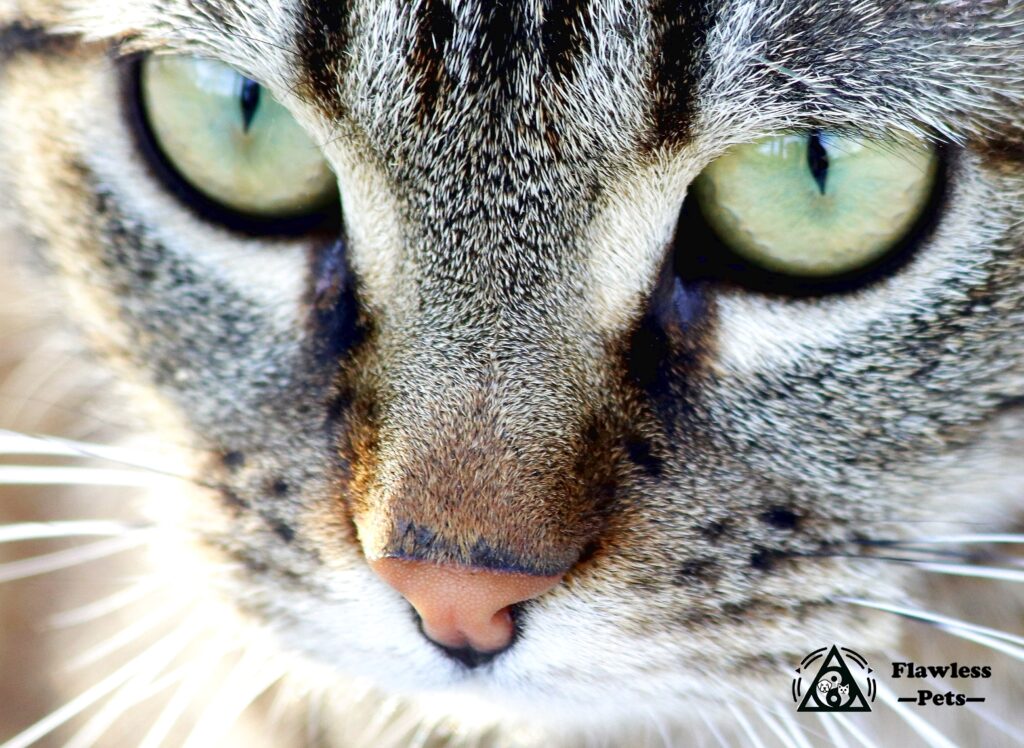
Their eyes are large and almond-shaped, set at a slight angle towards the base of the ears. Eye color doesn't necessarily correspond to coat color, except in pointed patterns where blue eyes are expected. The expression should be alert, intelligent, and often described as conveying a look of the wild, yet remaining gentle and approachable (TICA, n.d.-a).
Ears are medium in size, wide-set at the base, and have rounded tips. They should be situated on the top and side of the head, complementing the wedge shape. Lynx tipping (tufts of hair at the ear tips) is desirable, especially in the longhair variety, further enhancing the “wild” aesthetic, but not required.
Coat and Colors: Plush Protection in Two Lengths
The American Bobtail cat comes in two coat lengths: shorthair and longhair. Both varieties possess a resilient, dense double coat that provides protection from the elements.
The **shorthair** variety has a medium-length, semi-dense topcoat with a softer undercoat. The hair is hard and resilient rather than overly soft or plush.
The **longhair** variety features a slightly shaggier look, with medium-long hair that is longest on the ruff (around the neck), britches (back of the hind legs), belly, and tail. While longer, the coat texture remains resilient and is noted for being relatively non-matting compared to some other longhaired breeds (CFA, n.d.-a).
A major appeal of the American Bobtail cat is that *all* colors and patterns are accepted within the breed standard (TICA, n.d.-a). This includes solids, tabbies (in various patterns like mackerel, classic, spotted, ticked), tortoiseshells, calicos, bi-colors, and even pointed patterns. This wide range of possibilities means there's an American Bobtail cat to suit almost any aesthetic preference, with tabby patterns often enhancing the desired “wild” look.
Size and Weight: Medium to Large Presence
Reflecting their substantial build, American Bobtail cats are generally medium to large in size. Males are typically larger and heavier than females. Adult females usually weigh between 7 to 11 pounds (approximately 3.2 to 5 kg), while adult males can range from 12 to 16 pounds (approximately 5.4 to 7.3 kg) or sometimes even more, particularly if neutered (CFA, n.d.-a; TICA, n.d.-a). They are slow to mature, often taking two to three years to reach their full size and weight, similar to other larger breeds like the Maine Coon or Ragdoll.
Breed Feature Comparison Table
To better understand the unique attributes of the American Bobtail cat, here's a comparison with another well-known bobtailed breed, the Manx, and a standard-tailed breed, the Maine Coon (known for its large size).
| Feature | American Bobtail Cat | Manx | Maine Coon |
|---|---|---|---|
| Tail | Naturally short (1-4 inches), flexible, may be straight, kinked, or curved. Dominant gene (different from Manx). | Naturally tailless (rumpy) to full length (longy), including stumpy (short nub) and rumpy riser (small rise of bone). Specific dominant gene with potential health links. | Long, bushy, tapering tail, typically as long as the body. Standard feline tail structure. |
| Body Type | Medium-long, substantial, rectangular stance, athletic, muscular. Hind legs slightly longer than front. Medium to large size. | Short back, rounded appearance, hind legs noticeably longer than front giving a high rump. Medium size, compact and solid. | Long, rectangular body, broad chest, substantial boning, muscular. Large size. |
| Coat | Shorthair or Longhair. Dense, resilient double coat. All colors/patterns accepted. | Shorthair or Longhair (Cymric). Dense double coat. Many colors/patterns accepted. | Longhair. Heavy, shaggy, water-resistant double coat with distinct ruff. Many colors/patterns accepted (no pointed patterns). |
| Head Shape | Broad modified wedge, distinct brow, strong chin. “Wild” look. | Round head, round cheeks, firm chin. Sweet expression. | Medium-wide head, square muzzle, high cheekbones, strong chin. Gentle expression. |
| Temperament Notes | Intelligent, devoted, interactive, playful, adaptable (“Golden Retriever” like). | Playful, intelligent, loyal, often forms strong bond with one person. Can be good hunters. | Gentle giant, friendly, intelligent, good-natured, playful. |
| Origin | USA, late 1960s (natural mutation). | Isle of Man (natural mutation, older breed). | USA (Maine), likely natural development, older breed. |
This table highlights some key distinctions, particularly in tail genetics and body structure, that set the American Bobtail cat apart even from other unique breeds.
Personality and Temperament: The Devoted Companion
While the American Bobtail cat's unique appearance often draws initial attention, it's their exceptional personality that truly captures the hearts of their owners. Frequently described with affectionate comparisons to dogs, particularly Golden Retrievers, these cats possess a blend of intelligence, devotion, playfulness, and adaptability that makes them outstanding companions in a variety of households (TICA, n.d.-b). Understanding their temperament is key to appreciating why this breed has gained such a loyal following.
Intelligence and Trainability
The American Bobtail cat is widely regarded as a highly intelligent breed. This intelligence manifests in several ways: they are quick learners, adept problem-solvers, and keenly observant of their surroundings and human routines. Many owners report that their American Bobtails easily learn household rules, figure out how to open doors or cabinets (requiring cat-proofing!), and respond well to training. Their intelligence makes them good candidates for learning tricks, walking on a leash and harness, and engaging with puzzle toys that challenge their minds (CFA, n.d.-b). This cognitive ability means they thrive on mental stimulation and interaction; a bored American Bobtail might invent its own, potentially mischievous, games.
Affection and Social Bonds
Perhaps the most defining trait of the American Bobtail cat's personality is its deep devotion to its human family. They form strong bonds and are known for being interactive and seeking out companionship. Unlike more aloof breeds, an American Bobtail typically wants to be involved in household activities, whether it's “helping” with chores, supervising computer work, or snuggling up for movie night. They are known to greet family members at the door and enjoy being near their people (TICA, n.d.-b). While they may bond closely with one person, they generally extend their affection to the entire family, including children. Their patient and gentle nature often makes them excellent companions for kids, provided the children are taught respectful interaction. Many American Bobtails also coexist peacefully and even form friendships with other pets, including cat-friendly dogs, thanks to their adaptable and confident nature.
Activity Level and Playfulness
American Bobtails possess a playful spirit that lasts well into adulthood. They enjoy interactive games like fetch, chasing feather wands, or batting at rolling balls. Their athletic build means they appreciate opportunities for climbing and exploring, making cat trees or sturdy shelves valuable additions to their environment. While they are active and enjoy play sessions, they are not typically hyperactive or excessively demanding. They balance their bursts of energy with periods of quiet companionship and relaxation (CFA, n.d.-b). Providing regular playtime is important not just for physical exercise but also for strengthening the bond with their owner and satisfying their intelligent minds. Consider engaging them with items like interactive cat toys to keep them mentally and physically stimulated.
Communication Style
Interestingly, American Bobtail cats are not known for being particularly vocal in the traditional “meowing” sense. While they can meow, many owners report that they more frequently communicate through a delightful array of chirps, trills, and clicks (TICA, n.d.-b). They might also express themselves through body language – the expressive, albeit short, tail can still convey mood, and their intense gaze often communicates their desires effectively. This quieter vocal style can be appealing to those who prefer a less chatty feline companion, but owners quickly learn to interpret their unique sounds and signals.
Some anecdotal reports and breeder observations suggest that American Bobtails can be particularly attuned to human emotions, making them excellent therapy animals or simply deeply empathetic companions during times of stress or illness. While scientific studies on specific breed temperaments are limited, the consistent reports from owners and breeders highlight their reputation as sensitive and supportive pets (CFA, n.d.-b).
Caring for Your American Bobtail Cat: Needs and Recommendations
Providing proper care for an American Bobtail cat ensures their health, happiness, and longevity. While generally a low-maintenance breed compared to some, understanding their specific needs regarding grooming, nutrition, exercise, and environment is essential for responsible ownership. Their adaptable nature makes them relatively easy to care for, but attention to detail helps them thrive.
Grooming: Keeping the Coat Healthy
Grooming needs for the American Bobtail cat depend largely on whether they are the shorthair or longhair variety.
- Shorthair Variety: The shorthair American Bobtail requires minimal grooming. A weekly brushing session using a rubber curry brush or grooming mitt is usually sufficient to remove loose hair, distribute skin oils, and minimize shedding. During seasonal shedding periods (typically spring and fall), you might need to brush more frequently.
- Longhair Variety: The longhair American Bobtail, despite its resilient texture, requires more attention to prevent tangles and mats, particularly in the longer areas like the ruff, britches, and belly. Brushing two to three times a week with a steel comb or slicker brush is recommended (CFA, n.d.-b). Focus on areas prone to matting. While the coat is less prone to matting than breeds like Persians, regular maintenance keeps it in optimal condition.
Beyond coat care, routine grooming includes:
- Nail Trimming: Trim claws every few weeks as needed, using sharp cat nail clippers. This prevents ingrown nails and protects furniture.
- Ear Cleaning: Check ears weekly for dirt, wax buildup, or signs of infection (redness, odor, discharge). Clean gently with a vet-approved ear cleaner and cotton balls if necessary – never insert anything deep into the ear canal.
- Dental Hygiene: Regular dental care is crucial for all cats to prevent periodontal disease. Ideally, brush your cat's teeth several times a week with feline-specific toothpaste and a soft brush. Dental treats and professional cleanings by a veterinarian are also important components of oral health (Cornell Feline Health Center, n.d.-a).
Diet and Nutrition: Fueling the Athlete
As active, muscular cats, American Bobtails require a high-quality, balanced diet to support their energy levels and overall health. Key nutritional considerations include:
- High-Quality Protein: Choose cat foods where named meat sources (like chicken, turkey, fish) are listed as the first ingredients. Protein is essential for maintaining their lean muscle mass.
- Appropriate Life Stage Formula: Feed kitten-specific food until they are about 12 months old (or as advised by your vet, considering their slower maturation), then transition to an adult formula. Senior formulas may be beneficial for older cats.
- Portion Control: Follow feeding guidelines on the food packaging, adjusting based on your cat's age, weight, activity level, and body condition. American Bobtails can be prone to becoming overweight due to their sturdy build if overfed or under-exercised. Regular weigh-ins and body condition scoring can help manage weight.
- Wet and Dry Food: A combination of wet and dry food can be beneficial. Wet food helps increase water intake, which is important for urinary tract health, while dry food can have some dental benefits (though brushing is more effective). Providing access to quality cat food appropriate for their needs is fundamental.
- Fresh Water: Always provide access to fresh, clean water. Some cats prefer running water, so a cat water fountain might encourage better hydration.
Consult your veterinarian for specific dietary recommendations based on your individual cat's health status and needs. Avoid feeding human food, as many items can be toxic or nutritionally unbalanced for cats.
Exercise and Enrichment: Engaging Mind and Body
The intelligent and playful American Bobtail cat needs regular exercise and mental stimulation to prevent boredom and maintain physical fitness.
- Interactive Play: Engage in daily interactive play sessions using toys like feather wands, laser pointers (use cautiously, always ending with a physical “catch”), or balls. This mimics hunting behavior and strengthens your bond.
- Puzzle Toys: Food puzzles or treat-dispensing toys challenge their problem-solving skills and provide mental enrichment, especially when you're not home.
- Climbing Opportunities: Provide vertical space with cat trees, scratching posts with platforms, or secure shelving. This caters to their natural climbing instincts and athletic ability.
- Scratching Posts: Offer sturdy scratching posts (vertical and horizontal) made of materials like sisal rope or cardboard to satisfy their scratching needs and protect your furniture.
- Leash Training (Optional): Many American Bobtails take well to harness and leash training due to their intelligence and adaptability, allowing for safe outdoor exploration under supervision. Introduce the harness gradually and positively.
Living Environment: Adaptable and Content
American Bobtail cats are known for their adaptability and can thrive in various living situations, from apartments to large houses, as long as their needs are met. Key environmental factors include:
- Safety: Ensure a safe indoor environment by removing potential hazards like toxic plants, securing loose wires, and keeping chemicals out of reach. Window screens should be secure.
- Comfortable Resting Spots: Provide several cozy and secure places for your cat to rest, such as cat beds, blankets on furniture, or enclosed hideaways.
- Litter Box Management: Maintain clean litter boxes. The general rule is one box per cat plus one extra, placed in quiet, accessible locations. Scoop daily and change litter regularly.
- Companionship: While adaptable, they thrive on interaction with their human family. Ensure they receive adequate attention and aren't left alone for excessively long periods regularly.
By addressing these care aspects thoughtfully, you can provide a nurturing environment where your American Bobtail cat will flourish, showcasing their wonderful personality and enjoying a long, healthy life as a cherished member of your family.
Health and Wellness: A Generally Robust Breed
The American Bobtail cat is generally regarded as a healthy and robust breed, benefiting significantly from the diverse genetic background established by its founders and maintained by responsible breeders (TICA, n.d.-a). The emphasis on using healthy domestic cats in the breed's development, rather than relying heavily on specific pedigreed lines known for certain issues, has contributed to its overall vigor. However, like all domestic cats, they are susceptible to common feline ailments, and potential owners should be aware of general health considerations.
Lifespan Expectations
With proper care, including a balanced diet, regular veterinary check-ups, and a safe environment, the average lifespan of an American Bobtail cat is typically between 13 and 15 years, though many live well into their late teens or even early twenties (CFA, n.d.-b). Their longevity is often attributed to their genetic diversity.
Potential Genetic Considerations
While the American Bobtail is not strongly associated with a long list of breed-specific genetic diseases, potential buyers should still be aware of conditions that can affect cats in general, or those that might theoretically appear due to the breed's background or conformation:
- Hypertrophic Cardiomyopathy (HCM): This is the most common heart disease diagnosed in cats across many breeds. HCM involves a thickening of the heart muscle, which can lead to heart failure. While not specifically linked to American Bobtails as a high-risk breed compared to, say, Maine Coons or Ragdolls, responsible breeders often screen their breeding cats for HCM via echocardiogram (cardiac ultrasound) performed by veterinary cardiologists (International Cat Care, n.d.). Ask breeders about their screening practices.
- Hip Dysplasia: Although more commonly discussed in dogs, hip dysplasia (a malformation of the hip joint) can occur in larger, heavier-boned cat breeds. Given the American Bobtail's substantial build, it's a theoretical possibility, though not widely reported as a major breed problem. Symptoms might include lameness, difficulty jumping, or a “bunny hopping” gait.
- Polycystic Kidney Disease (PKD): This inherited condition, causing cysts to form in the kidneys, is primarily associated with Persian cats and related breeds. Due to the diverse domestic cat ancestry used in developing the American Bobtail, there's a small theoretical risk if cats with Persian lineage were used far back in the pedigree lines. Reputable breeders typically avoid lines known to carry PKD, and DNA tests are available.
It's important to reiterate that the American Bobtail is not considered predisposed to these conditions to the extent seen in some other breeds. Their robust nature is one of their key attributes.
Tail-Specific Health Notes
A common question concerns whether the bobbed tail causes health problems, particularly spinal issues, similar to those sometimes seen in the Manx breed. The genetic mutation causing the American Bobtail's short tail is different from the Manx mutation (Lyons et al., 2009). The Manx gene can, in severe cases (especially in homozygous form, which is lethal), lead to significant spinal defects, spina bifida, and problems with bowel/bladder control (“Manx Syndrome”).
The American Bobtail gene primarily affects the length of the tail vertebrae. While minor vertebral variations or fusions within the shortened tail structure itself are part of the breed's characteristics (the kinks and curves), significant spinal problems directly linked to the bobtail gene are considered rare in this breed (TICA, n.d.-a). Responsible breeding practices focus on selecting cats with healthy, flexible tails and avoiding extremes that might hint at underlying issues. Unlike the Manx, taillessness is not a desired trait and can indicate problems. If you notice your American Bobtail having difficulty walking, jumping, or controlling urination/defecation, consult a veterinarian immediately, as these could indicate spinal or neurological issues, though not necessarily linked to the bobtail gene itself.
Preventive Veterinary Care
Regardless of breed robustness, preventive care is paramount for a long and healthy life. This includes:
- Regular Veterinary Examinations: Annual check-ups (or semi-annual for senior cats) allow your vet to monitor overall health, detect potential issues early, and provide tailored advice.
- Vaccinations: Follow your veterinarian's recommended vaccination schedule to protect against common feline infectious diseases like panleukopenia, herpesvirus, calicivirus, and rabies. Lifestyle factors (e.g., indoor vs. outdoor access) may influence recommendations for other vaccines like Feline Leukemia Virus (FeLV).
- Parasite Control: Implement year-round prevention for fleas, ticks, heartworms (depending on geographic location), and intestinal parasites based on veterinary guidance.
- Spaying/Neutering: Spaying females and neutering males prevents unwanted litters and offers significant health benefits, including reducing the risk of certain cancers and eliminating hormone-driven behaviors.
- Dental Care: As mentioned under grooming, regular dental check-ups and home care are vital for preventing painful dental disease, which can affect overall health (Cornell Feline Health Center, n.d.-a).
By partnering with a reputable breeder who prioritizes health screening and maintaining a consistent preventive care schedule with your veterinarian, you can help ensure your American Bobtail cat enjoys the robust health the breed is known for.
If you have specific health concerns, it's always best to consult with a qualified veterinarian. They can provide the most accurate information and guidance based on your cat's individual health status and history.
Comparing Bobtails: American Bobtail vs. Other Short-Tailed Breeds
The American Bobtail cat is just one of several cat breeds known for a naturally short tail. Understanding the differences between these breeds is important for appreciation and identification, as they arise from distinct genetic mutations and possess different physical and temperamental characteristics. Let's compare the American Bobtail to three other well-known bobtailed breeds: the Manx, the Japanese Bobtail, and the Pixie-bob.
American Bobtail vs. Manx
- Genetics and Tail: This is the most critical difference. The American Bobtail's tail is caused by a dominant gene resulting in a variable length (1-4 inches), flexible tail. The Manx tail (or lack thereof) is caused by a different dominant gene (the M gene) that can result in varying lengths: ‘rumpy' (no tail), ‘rumpy riser' (small bump), ‘stumpy' (partial tail), or ‘longy' (full tail). The Manx gene, especially when homozygous (MM), is associated with severe spinal defects (Manx Syndrome), making responsible breeding crucial (Lyons et al., 2009). The American Bobtail gene is not typically associated with such severe health issues.
- Body Type: The American Bobtail has a moderately long, rectangular, athletic body with substantial boning and slightly longer hind legs. The Manx has a distinctively short back, rounded appearance, and significantly longer hind legs, giving it a high rump and a characteristic hopping gait.
- Head Shape: The American Bobtail has a broad modified wedge shape with a “wild” look. The Manx has a round head with round cheeks and a generally sweeter expression.
- Origin: American Bobtail originated in the USA in the 1960s. The Manx originated on the Isle of Man, likely centuries ago.
American Bobtail vs. Japanese Bobtail
- Genetics and Tail: Both breeds have naturally short tails due to dominant genes, but the genes are different and result in distinct tail types. The American Bobtail has a shorter, often kinked or curved tail (1-4 inches). The Japanese Bobtail's gene results in a tail with fused vertebrae, carried curved or angled, resembling a rabbit's tail or a “pom-pom.” The tail structure is quite different upon close examination.
- Body Type: The American Bobtail is medium to large, substantial, muscular, and rectangular. The Japanese Bobtail is medium-sized, elegant, slender yet muscular, with clean lines and high cheekbones. Longhaired Japanese Bobtails have a finer coat texture.
- Head Shape: American Bobtail has a broad modified wedge. Japanese Bobtail has a distinctive long, triangular head with high cheekbones and large, upright ears.
- Color Restrictions: American Bobtails accept all colors/patterns. While Japanese Bobtails come in various colors, the striking Mi-Ke (calico – white with red and black patches) pattern is particularly prized and traditional.
- Origin: American Bobtail from the USA (1960s). Japanese Bobtail is an ancient breed originating in Japan, depicted in art for centuries.
American Bobtail vs. Pixie-bob
- Appearance Goal: Both breeds aim for a somewhat “wild” look reminiscent of a bobcat. However, the Pixie-bob standard specifically aims to resemble the North American Coastal Red Bobcat.
- Tail: Both have naturally occurring bobbed tails. The Pixie-bob standard calls for a minimum length of 2 inches, ideally reaching the hock, and it must be articulated. The American Bobtail tail is typically 1-4 inches, ideally above the back but not past the hock.
- Polydactyly: While not required, polydactyly (extra toes) is permissible and common in the Pixie-bob breed standard (TICA allows up to 7 toes per paw). Polydactyly is a disqualification in the American Bobtail standard (CFA, n.d.-a; TICA, n.d.-a).
- Color/Pattern: American Bobtails accept all colors/patterns. Pixie-bobs are only accepted in Brown Spotted Tabby pattern, with a required mousy grey undercoat and ticking (TICA Breed Standard for Pixie-bob).
- Head and Ears: The Pixie-bob has a specific inverted pear-shaped head, deep-set eyes, and often prominent lynx tips on the ears. The American Bobtail has a broad modified wedge head.
- Temperament: Both are known for being intelligent and devoted, often described as dog-like.
- Origin: American Bobtail from the USA (1960s, Yodie). Pixie-bob also from the USA (Washington State, 1980s), with foundation cats believed by the founder to be natural hybrids of domestic cats and bobcats, though genetic testing hasn't confirmed bobcat ancestry (TICA Breed History for Pixie-bob).
While all these breeds share the trait of a shortened tail, they are distinct in their genetic origins, physical conformation, specific appearance standards, and history. Recognizing these differences helps potential owners and enthusiasts appreciate the unique qualities of the American Bobtail cat.
Finding Your Feline Friend: Choosing an American Bobtail Cat

Once you've fallen in love with the idea of sharing your life with an intelligent, devoted American Bobtail cat, the next step is finding one. Whether you choose to purchase a kitten from a breeder or adopt from a rescue organization, making an informed decision is crucial for both your happiness and the cat's well-being. Here's what to consider:
Reputable Breeders
Purchasing from a responsible, ethical breeder is often the preferred route for those seeking a purebred kitten with known lineage and temperament traits consistent with the breed standard. A reputable American Bobtail breeder will prioritize the health, socialization, and well-being of their cats above all else.
What to look for in a reputable breeder:
- Affiliation with Cat Associations: Good breeders are often registered with major cat registries like The International Cat Association (TICA) or the Cat Fanciers' Association (CFA). These organizations have codes of ethics for breeders. You can often find breeder listings on their websites:
- TICA American Bobtail Breeder Listing
- CFA Breeder Search (Search for American Bobtail)
- Health Testing: Responsible breeders perform health screenings on their breeding cats for relevant conditions, such as HCM (via echocardiogram) and potentially other genetic issues like PKD if relevant in their lines. They should be transparent about test results.
- Knowledgeable and Transparent: They should be knowledgeable about the American Bobtail breed, happy to answer your questions thoroughly, and willing to show you where the kittens are raised. They should also ask you questions to ensure their kitten is going to a suitable home.
- Clean and Stimulating Environment: Kittens should be raised indoors, in a clean, safe, and stimulating environment where they receive plenty of human interaction and socialization from an early age.
- Health Guarantee and Contract: Reputable breeders typically offer a written health guarantee and sales contract outlining the responsibilities of both buyer and seller. This often includes requirements for spaying/neutering pet-quality kittens.
- Kittens Stay with Mother: Kittens should remain with their mother and littermates until they are at least 12-16 weeks old to ensure proper socialization, weaning, and development.
- Veterinary Records: Kittens should come with initial vaccinations and deworming records from a licensed veterinarian.
Red flags to watch out for: Breeders selling kittens younger than 12 weeks, unwilling to show you the parents or living conditions, lacking health records or guarantees, selling multiple different breeds, or seeming primarily focused on profit.
Rescue and Adoption
While finding a purebred American Bobtail cat in a general animal shelter might be uncommon, it's not impossible. Sometimes adult cats are surrendered due to changes in owner circumstances. Additionally, there may be breed-specific rescue groups or general cat rescues that occasionally have American Bobtails or bobtail mixes available for adoption.
Adopting from a rescue offers a loving home to a cat in need and can be incredibly rewarding. Adopted cats often come already spayed/neutered and with basic veterinary care completed. Be prepared that the cat's full history or exact lineage may be unknown. You can search large adoption websites like Petfinder or Adopt-a-Pet, filtering by breed (though visual identification can sometimes be inaccurate), or contact local shelters and rescue groups to let them know you are interested in an American Bobtail if one becomes available.
Consider cats that might be American Bobtail mixes – they can possess many of the wonderful personality traits even without a pedigree.
Associated Costs

Owning an American Bobtail cat involves both initial and ongoing expenses:
- Purchase Price (from a breeder): The cost of an American Bobtail kitten from a reputable breeder typically ranges from $800 to $1,500 or more (as of 2025), depending on factors like pedigree, coat length, color/pattern, and whether the cat is pet quality or show/breeding quality. Remember this price reflects the breeder's investment in health testing, quality care, and responsible breeding practices.
- Adoption Fee (from a rescue): Adoption fees are significantly lower, usually ranging from $75 to $250, generally covering spay/neuter, initial vaccinations, and microchipping.
- Initial Supplies: Food/water bowls, litter box, litter, scratching posts, bedding, toys, carrier, grooming tools.
- Ongoing Costs: High-quality cat food, litter, annual veterinary check-ups, vaccinations, parasite prevention, potential grooming appointments (for longhairs), pet insurance (optional but recommended), and replacement toys/supplies.
Is an American Bobtail Right for You?
Before bringing an American Bobtail cat home, honestly assess if the breed fits your lifestyle:
- Companionship Needs: Do you have enough time to provide the interaction and attention these devoted cats crave? They don't do well if left alone for very long periods consistently.
- Activity Level: Are you prepared to engage in regular play sessions and provide environmental enrichment like climbing structures?
- Grooming Commitment: Can you commit to regular brushing, especially for the longhair variety?
- Household Harmony: While adaptable, consider your existing pets and family members. Their generally good nature makes them suitable for families with children and other pets, provided proper introductions and supervision occur.
- Lifespan: Are you prepared for a commitment that could last 15 years or more?
Choosing to bring an American Bobtail cat into your life is a significant decision. By doing thorough research, selecting a source responsibly (breeder or rescue), and understanding the breed's needs, you can look forward to many years of rewarding companionship with these remarkable felines.
Living with an American Bobtail: Daily Life and Enrichment
Sharing your home with an American Bobtail cat is often described as having a furry shadow with a playful spirit and a loving heart. Their interactive nature means they integrate deeply into the family routine. Expect your Bobtail to greet you at the door, follow you from room to room, supervise your activities (from cooking to computer work), and readily hop onto your lap or beside you on the sofa when it's time to relax. Their intelligence shines through in daily life; many owners report their Bobtails quickly learn household schedules and anticipate events like meal times or play sessions.
Enrichment is key to keeping these intelligent cats happy and preventing boredom-related behaviors. Rotate toys to keep things interesting. Puzzle feeders turn mealtime into a stimulating challenge. Cat trees placed near windows provide both exercise and entertainment (“cat TV”). Consider clicker training for simple tricks or commands – their intelligence makes them surprisingly receptive. Many American Bobtails enjoy going for walks on a harness and leash, offering safe outdoor exposure and new sensory experiences. Ensure any outdoor time is supervised and in a secure area.
Integrating an American Bobtail with existing pets usually goes smoothly due to their adaptable and confident, yet gentle, nature. Slow, positive introductions are always recommended. Many Bobtails coexist happily with dogs, sometimes even initiating play. When introducing to resident cats, ensure adequate resources (litter boxes, food stations, resting spots) are available to minimize competition. Their playful but generally non-aggressive demeanor often wins over other feline companions. Providing engaging activities, such as batting at fun cat toys, can also help facilitate positive interactions and shared playtime within a multi-pet household.
Living with an American Bobtail means embracing their desire for connection. They thrive on being part of the family's daily rhythm, offering quiet companionship during work-from-home hours and enthusiastic participation during playtime. Their unique blend of independence and devotion makes them adaptable yet deeply bonded companions.
The American Bobtail in the Wider World
Compared to ancient breeds like the Siamese or Persian, or even popular large breeds like the Maine Coon, the American Bobtail cat is a relative newcomer to the recognized cat fancy world, having only gained formal recognition in the late 1980s and early 2000s depending on the association (CFA, n.d.-a; TICA, n.d.-a). As such, they haven't yet permeated popular culture or media to the extent of some other breeds. You are less likely to see an American Bobtail featured prominently in films, literature, or widespread advertising campaigns compared to more established breeds.
However, within the cat enthusiast community and among those seeking interactive, intelligent, and unique-looking companions, the American Bobtail cat has steadily gained popularity and appreciation. Their “wild look, domestic heart” appeal, coupled with their reputation as adaptable family pets, resonates with many potential owners. They are a frequent sight at cat shows organized by associations like TICA and CFA, where breeders showcase exemplary examples of the breed and educate the public.
The breed's origin story, centered around the found cat Yodie, adds a touch of Americana romance. Furthermore, their reported success as therapy animals, while often anecdotal, highlights their gentle, intuitive nature and contributes to their positive image (CFA, n.d.-b). As more people discover the delightful personality behind the bobbed tail, the American Bobtail's presence and recognition in the wider world are likely to continue growing. Their story is primarily one shared within the dedicated circles of breeders and owners who value their unique combination of traits.
Responsible Breeding and Conservation
The development and continuation of the American Bobtail cat breed rely heavily on the principles of responsible and ethical breeding. Given the breed's foundation from a natural mutation and subsequent outcrossing to diverse domestic cats, maintaining genetic health and diversity is paramount.
Responsible breeders prioritize health above all else. This involves understanding feline genetics, carefully selecting breeding pairs to minimize the risk of inherited disorders, and performing relevant health screenings (like HCM checks). They avoid close inbreeding and aim to produce kittens that are not only physically sound but also possess the stable, desirable temperament characteristic of the American Bobtail cat. Ethical breeders are transparent about their practices, provide proper socialization for kittens, and ensure they go to suitable, loving homes under contracts that often mandate spaying or neutering of pet-quality animals (TICA, n.d.-c).
The conservation aspect for a relatively new breed like the American Bobtail focuses on preserving its unique characteristics while ensuring long-term health and vigor. This involves careful management of the gene pool, occasional thoughtful outcrossing according to registry rules (if deemed necessary and permitted) to maintain diversity, and collaboration among breeders to share information and best practices. Supporting ethical breeders who adhere to these principles helps ensure the American Bobtail cat continues to thrive as a healthy, well-adjusted, and cherished companion breed for generations to come.
Frequently Asked Questions (FAQ) About the American Bobtail Cat
- 1. Is the American Bobtail cat related to the wild Bobcat?
- No, despite the physical resemblance (sturdy build, short tail, sometimes tabby pattern), the American Bobtail cat is a fully domestic cat breed. Its foundation cat, Yodie, was a domestic kitten with a natural tail mutation. While the breed standard aims for a “wild” look, there is no confirmed wild Bobcat ancestry. Genetic testing has not supported claims of hybridization sometimes associated with similar-looking breeds like the Pixie-bob (TICA, n.d.-a).
- 2. Is the American Bobtail's tail surgically docked or broken?
- Absolutely not. The short tail is a completely natural trait caused by a spontaneous dominant genetic mutation. Kittens are born with their short tails. The length and structure (straight, kinked, curved) vary naturally from cat to cat, and docking is unethical and against breed standards (CFA, n.d.-a).
- 3. Are American Bobtail cats good pets for families with children or other pets?
- Yes, American Bobtails are generally considered excellent family pets. They are known for their patience, gentleness, and playful nature, often getting along well with respectful children. Their adaptable and confident temperament usually allows them to coexist peacefully with other cats and cat-friendly dogs, especially with proper introductions (TICA, n.d.-b). Their interactive personality means they enjoy being part of a busy household.
- 4. Do American Bobtail cats have special health problems related to their short tail?
- Unlike the Manx breed, whose tail mutation can be linked to serious spinal and neurological issues (Manx Syndrome), the gene causing the American Bobtail's shorter tail is generally not associated with significant health problems. While minor vertebral variations exist within the tail structure, severe spinal defects are considered rare in this breed. Responsible breeders select for healthy tail structures (TICA, n.d.-a; Lyons et al., 2009).
- 5. How much does an American Bobtail cat cost?
- The cost can vary. Purchasing a kitten from a reputable breeder typically ranges from $800 to $1,500 or more (as of 2025), reflecting the breeder's investment in health, socialization, and lineage. Adoption fees from rescue organizations are much lower, usually $75 to $250. Remember to factor in ongoing costs for food, litter, veterinary care, and supplies throughout the cat's life.
- 6. How much grooming do American Bobtail cats need?
- Grooming requirements depend on the coat length. Shorthair American Bobtails need minimal grooming, typically just a weekly brushing. Longhair varieties require more frequent brushing, perhaps 2-3 times per week, to prevent tangles and mats, especially around the ruff, britches, and belly. Both varieties benefit from regular nail trims, ear checks, and dental care (CFA, n.d.-b).
- 7. Are American Bobtail cats very active or demanding?
- They are playful and intelligent cats that enjoy interaction and activity, but they are not typically considered hyperactive. They appreciate daily play sessions and environmental enrichment like climbing trees and puzzle toys. However, they also enjoy quiet companionship and downtime with their families. They are interactive and seek attention but balance activity with affectionate relaxation (CFA, n.d.-b; TICA, n.d.-b).
References
Note: Please verify link validity as web addresses can change over time.
- Cat Fanciers' Association (CFA). (n.d.-a). About the American Bobtail. Retrieved January 15, 2025, from https://cfa.org/american-bobtail/
- Cat Fanciers' Association (CFA). (n.d.-b). American Bobtail Breed Standard. Retrieved January 15, 2025, from https://cfa.org/wp-content/uploads/2019/06/american-bobtail-standard.pdf
- Cornell Feline Health Center. (n.d.-a). Feline Dental Disease. Cornell University College of Veterinary Medicine. Retrieved January 15, 2025, from https://www.vet.cornell.edu/departments-centers-and-institutes/cornell-feline-health-center/health-information/feline-health-topics/feline-dental-disease
- International Cat Care. (n.d.). Hypertrophic Cardiomyopathy (HCM). Retrieved January 15, 2025, from https://icatcare.org/advice/hypertrophic-cardiomyopathy-hcm/
- Lyons, L. A., Buckingham, K. J., & Bailey, S. J. (2009). Feline Genetics: Clinical applications and genetic testing. In S. J. Ettinger & E. C. Feldman (Eds.), Textbook of Veterinary Internal Medicine (7th ed., Vol. 1). Saunders Elsevier. [Note: Specific page numbers may vary; reference points to general knowledge typically included in such comprehensive veterinary texts about Manx vs. other bobtail genetics. A direct link to a freely accessible version of this specific chapter is unlikely, but the information is standard veterinary knowledge.] A related accessible article discussing tail mutations: Lyons, L. A. (2015). DNA mutations of the cat – The good, the bad and the ugly. Journal of Feline Medicine and Surgery, 17(3), 203–219. https://doi.org/10.1177/1098612X15577081
- The International Cat Association (TICA). (n.d.-a). American Bobtail Breed. Retrieved January 15, 2025, from https://tica.org/breeds/browse-all-breeds?view=article&id=831:american-bobtail-breed&catid=79
- The International Cat Association (TICA). (n.d.-b). American Bobtail Breed Seminar. Retrieved January 15, 2025, from https://tica.org/phocadownload/abseminar.pdf
- The International Cat Association (TICA). (n.d.-c). TICA Code of Ethics. Retrieved January 15, 2025, from https://tica.org/resources/our-association/code-of-ethics
- The International Cat Association (TICA). (n.d.-d). Pixiebob Breed Seminar. Retrieved January 15, 2025, from https://tica.org/phocadownload/pbseminar.pdf [Provides context for Pixiebob comparison]
- The International Cat Association (TICA). (n.d.-e). Japanese Bobtail Breed Seminar. Retrieved January 15, 2025, from https://tica.org/phocadownload/jbseminar.pdf [Provides context for Japanese Bobtail comparison]








 English
  简体中文
简体中文  Français du Canada
  Deutsch
  Español
  Português
  한국어
한국어  日本語
日本語  Italiano
  Русский
  Dansk
Dansk  Nederlands
  Svenska
  Suomi
Suomi  Polski
  Norsk bokmål